
This announcement was initially published by Northumbria University, 14 October 2026.
New research published today by the AHRC Creative Communities programme provides fresh evidence of how greater devolution can drive innovation, inclusive growth and stronger communities across the UK.
The research, published at a pivotal moment for devolution under Prime Minister Andy Burnham’s new government, argues that transferring greater powers and resources to places must be accompanied by new ways of involving communities in the decisions, research and innovation that shape their futures.
Funded by the UKRI Arts and Humanities Research Council (AHRC) and led by Northumbria University, the findings come from the programme’s Community Innovation Practitioner (CIP) Awards.
The Community Innovation Practitioner Awards represent an investment of almost £500,000, catalysing place-based research and innovation across all four nations of the UK.
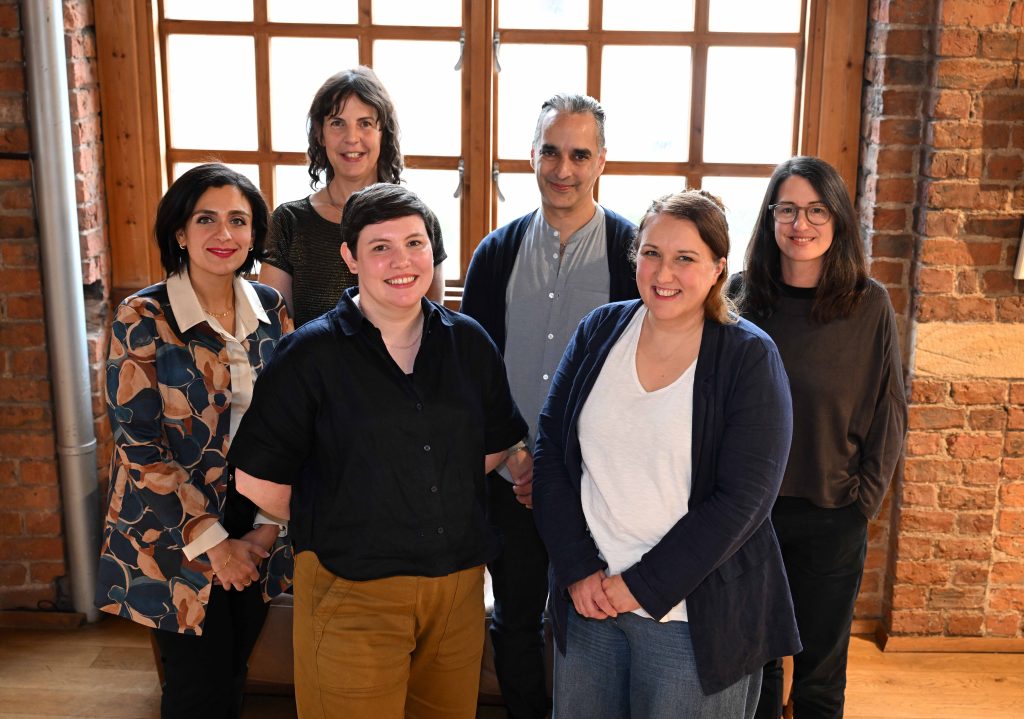
Six Community Innovation Practitioners have today published a new collection of case studies, devolved policy papers and Creative Communities podcast episodes.
Together, they demonstrate how researchers, communities, businesses, cultural organisations and devolved authorities can work differently to address locally identified challenges – and how these approaches could inform devolved policymaking.
From devolution of power to devolution of participation
Over the past year, the CIPs have worked on live challenges across England, Scotland, Wales and Northern Ireland, testing approaches that respond to the different economic, cultural and governance contexts of their places.
Their work has included:
A model for the next phase of devolution
The findings have particular relevance as the new UK Government considers how to deepen devolution and strengthen the role of mayors, nations and regions in delivering national priorities.
The research suggests that devolution cannot simply mean transferring existing policies, funding pots or responsibilities from Whitehall to regional institutions. Successful devolution also requires the capacity to generate evidence locally, draw on community knowledge and create mechanisms through which people can participate in shaping the policies and investments that affect their places.
Community Innovation Practitioners provide one model for achieving this. Positioned between research, industry, policy and communities, the CIPs have created cross-sector partnerships around locally identified challenges and used co-creation to develop and test solutions. In doing so, they demonstrate how universities and research funding can become part of the infrastructure of devolution – connecting local knowledge with research expertise, investment and policymaking.
The research provides policymakers with practical evidence about what should be devolved, how local innovation capacity can be strengthened, and how communities can have a greater role in determining what growth looks like in their region or nation.
Professor Christopher Smith, AHRC Executive Chair, said: “Devolution is not a new story but it is an urgent one. AHRC has been investing for years in the evidence for how to make devolution work better, right across the UK.
“Creative Communities is not just a programme about the creative and cultural economy, it is also a pathfinder programme for how to build the communities and the conversations that underpin successful empowerment of our citizens.
“It breaks down the barriers and shows how innovation can arise everywhere, if we enable it.
“This programme is part of AHRC’s deep commitment to the place agenda, and our research drive to improve the lives of every citizen.”
Professor Katy Shaw, Director of the AHRC Creative Communities programme, said: “The next phase of devolution presents a major opportunity to change not only where decisions are made, but how they are made and who gets to participate in them.”
“Our Community Innovation Practitioners show what becomes possible when communities are treated as partners in research and innovation rather than simply the recipients of policy. Across all four nations, these projects demonstrate that local knowledge, research expertise and devolved leadership can be brought together to generate practical solutions to some of the challenges facing places today.”
“For the new government, the message from this research is clear: if we want devolution to deliver more inclusive growth, we need to devolve the capacity to innovate as well as the power to spend.”
Professor Lisanne Gibson, Pro Vice Chancellor for the Faculty of Society and Culture at Northumbria University, said: “Northumbria University is proud to host the £3.9m AHRC UK Creative Communities programme. Its new podcast series, co-creation case studies and devolved policy papers demonstrate the vital role that culture, creativity and inclusive innovation can play in shaping the future of UK devolution.
“Working across all four nations, the programme has placed communities at the heart of research and policymaking, generating practical evidence of how local knowledge and creative practice can drive more inclusive growth and meaningful change.
“This work reinforces Northumbria’s reputation for research that delivers real-world impact and offers policymakers a compelling case for investing not only in places, but in the people, ideas and creativity within them.”
Evidence for policymakers
Collectively, the new case studies, policy papers and podcasts provide a practical evidence base for policymakers, mayors, combined authorities, devolved governments, research funders, universities and community organisations seeking to make place-based policymaking work more effectively.
They demonstrate that recognising place is not simply about geography. It means recognising the different assets, identities, institutions, histories and forms of expertise that exist within communities and creating the conditions in which those resources can contribute to research, innovation and growth.
As the UK enters a new phase of devolution, the research makes the case for community innovation to become part of the infrastructure through which devolved government delivers change – connecting national missions with the knowledge, creativity and capacity of people and places across the country.
The six Community Innovation Practitioner case studies, devolved policy papers and podcast episodes are available from the AHRC Creative Communities programme.
About Creative Communities
AHRC Creative Communities is a £3.9m research programme funded by the Arts and Humanities Research Council (AHRC) and hosted by Northumbria University.
AHRC Creative Communities is building a new evidence base for culture, research and innovation in UK devolution. Our investments enable co-created culture to enhance belonging, address regional inequality and break down barriers to opportunity in communities across all 4 nations of the UK.
Brought to you by